The Science Behind Pattern Learning
Our methodology is grounded in cutting-edge research by world-leading education scientists who have proven that recognising patterns and building mental models is the most effective way to learn.
At MeBest, we believe every exam question follows a learnable pattern. This isn't just our opinion — it's backed by the most influential education researchers of our time. Here are five leading scientists whose groundbreaking work forms the foundation of our approach.
Read our in-depth article on how pattern-based learning works and why it outperforms traditional practice papers.
Why Pattern Learning Comes First
Pattern-Based Learning
Build the foundation
Children need to accumulate a library of recognisable patterns. Through structured practice of specific pattern types, they build mental schemas that become automatic. You can't think creatively about problems you've never seen before.
Heuristic Thinking
Apply the foundation creatively
Once students have a rich library of patterns, they can combine, adapt, and apply them to truly novel problems. Heuristic strategies like "work backwards" or "simplify the problem" only work when you already have building blocks to work with.
Cognitive science is clear: you cannot inspire discovery in a vacuum. Pattern mastery is the essential foundation that makes higher-order thinking possible.
Five Leading Education Scientists
John Sweller
Emeritus Professor of Educational Psychology, University of New South Wales, Australia. Creator of Cognitive Load Theory, one of the most cited frameworks in instructional design.
"For schema acquisition to occur, instruction should be designed to reduce working memory load."
Sweller's research proved that learning is fundamentally about building schemas (patterns) in long-term memory. When students have acquired a schema, they can instantly recognise and solve an entire category of problems as a single unit — rather than processing each element separately, which overloads working memory.
How this shapes MeBest: Sweller's theory IS the scientific basis for MeBest. Each Pattern in our system is a schema. When students practise varied instances of the same pattern, they are building a schema in long-term memory. Once acquired, this schema allows them to recognise and solve any question of that type instantly — exactly what Sweller's research predicts.
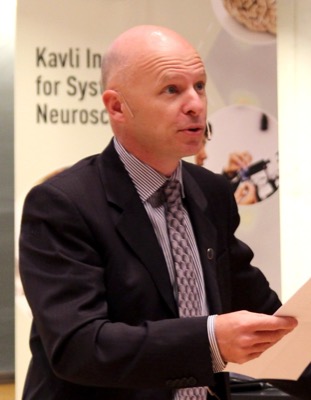
Stanislas Dehaene
Professor at the Collège de France, Chair of Experimental Cognitive Psychology. Member of the French Academy of Sciences. Director of the INSERM-CEA Cognitive Neuroimaging Unit.
"The brain is not a blank slate — it is a structured organ that actively generates hypotheses about the outside world and learns by comparing its predictions to reality."
Dehaene identified four pillars of effective learning based on neuroscience: attention (focusing on the right pattern), active engagement (testing yourself, not passively reading), error feedback (learning from mistakes), and consolidation (strengthening neural pathways through sleep and spaced practice).
How this shapes MeBest: MeBest's practice loop maps directly onto Dehaene's four pillars. Attention: students focus on one specific pattern. Active engagement: they solve instances, not just read examples. Error feedback: immediate correction with AI explanations. Consolidation: spaced practice across sessions builds durable neural pathways.
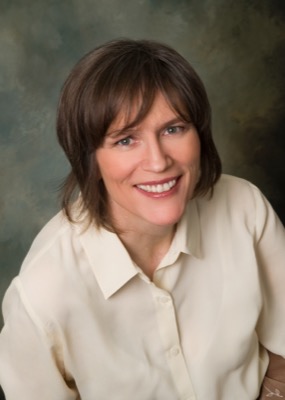
Barbara Oakley
Professor of Engineering, Oakland University & McMaster University. Creator of "Learning How to Learn," the world's most popular online course (3M+ students on Coursera).
"Pulling the key idea from your own mind, instead of just reading or rereading it on the page, is the critical idea behind active recall."
Oakley synthesised neuroscience research into practical learning strategies. Her key insights: the brain organises knowledge into "chunks" (compact neural patterns); and active recall (retrieving information from memory) vastly outperforms passive review.
How this shapes MeBest: Oakley's concept of "chunking" is essentially what MeBest calls a Pattern. When a student masters a pattern, they build a neural chunk — a compact, reusable mental structure that activates instantly when they recognise the pattern. Our practice flow (attempt, review, retry with variations) directly implements active recall.
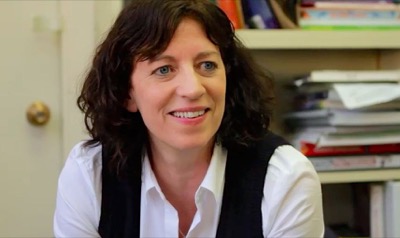
Jo Boaler
Nomellini-Olivier Professor of Education, Stanford Graduate School of Education. Founder of youcubed.org, reaching millions of students worldwide.
"The difference between those who succeed and those who don't is not the brains they were born with, but their approach to life, the messages they receive about their potential, and the opportunities they have to learn."
Boaler's research shows that traditional education (memorising procedures and speed-drilling) harms students by creating anxiety and a fixed mindset. She advocates teaching through visual patterns, creative problem-solving, and conceptual understanding.
How this shapes MeBest: Boaler explicitly argues that learning is fundamentally about pattern recognition, not memorisation. MeBest's architecture — organising content by patterns, teaching students to recognise underlying structure across varied presentations — is a concrete implementation of her research.
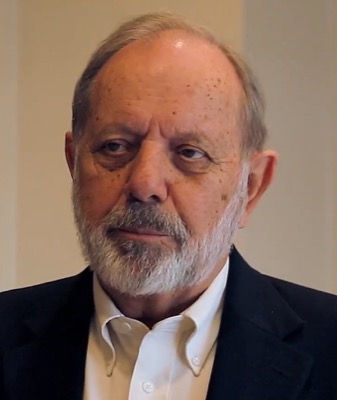
Robert A. Bjork
Distinguished Research Professor of Psychology, UCLA. Former President of the Association for Psychological Science. Pioneer in the science of learning and memory.
"Conditions that make performance improve rapidly often fail to support long-term retention and transfer, whereas conditions that create challenges and slow the rate of apparent learning often optimise long-term retention."
Bjork's research revealed a counterintuitive truth: making learning harder in strategic ways ("desirable difficulties") — such as spacing practice, interleaving topics, and varying conditions — dramatically improves long-term retention and the ability to apply knowledge to new situations.
How this shapes MeBest: MeBest's core mechanic is a desirable difficulty: instead of repeating identical questions, students practise varied instances of the same pattern. Each variation forces retrieval and adaptation, which Bjork's research shows produces far deeper, more transferable learning than repetitive drilling.
Pattern Learning at MeBest
These five researchers share a common insight: real learning happens when students build schemas — reusable mental patterns — through active, varied practice. Not by memorising isolated answers. MeBest puts this science into practice. Every pattern you master is a schema in long-term memory, ready to activate the moment you recognise it on an exam.